Pico 2 W wireless examples
Official C/C++ examples cover Wi-Fi, Bluetooth, PIO, USB and peripherals across the Pico family.
View original project ↗What you’re building
Raspberry Pi’s pico-examples repository is the official C/C++ sample suite for the Pico SDK. For Pico 2 W, it covers RP2350 fundamentals plus GPIO, ADC, I2C, SPI, UART, PWM, PIO, multicore, low-power, flash, USB, Wi-Fi networking, Bluetooth, and many SDK subsystems. CMake selects the hardware through PICO_PLATFORM and PICO_BOARD, producing individual binaries or UF2 files that can be copied to a board in BOOTSEL mode. The expected outcome is a small, inspectable hardware or wireless demonstration that can become a project baseline. Examples are not all portable: RP2040-only, RP2350-only, Wi-Fi, Bluetooth, and external pico-extras targets are conditionally available, so the board/platform configuration must match the selected example before building or flashing.
Key steps
- Install the Pico SDK toolchain and clone pico-examples with access to the matching pico-sdk checkout.
- Choose an example compatible with RP2350 and, for network examples, a board that includes Wi-Fi or Bluetooth.
- Configure CMake for RP2350 and the Pico 2 W board using the documented PICO_PLATFORM and PICO_BOARD variables.
- Build the selected target and locate its generated UF2 or binary output.
- Hold BOOTSEL while connecting the board, copy the UF2 to the mounted drive, and verify the example’s documented behavior.
Original project and code
Original project pages, manufacturer documentation and repositories used while preparing this page. Last reviewed .
Hardware for this project
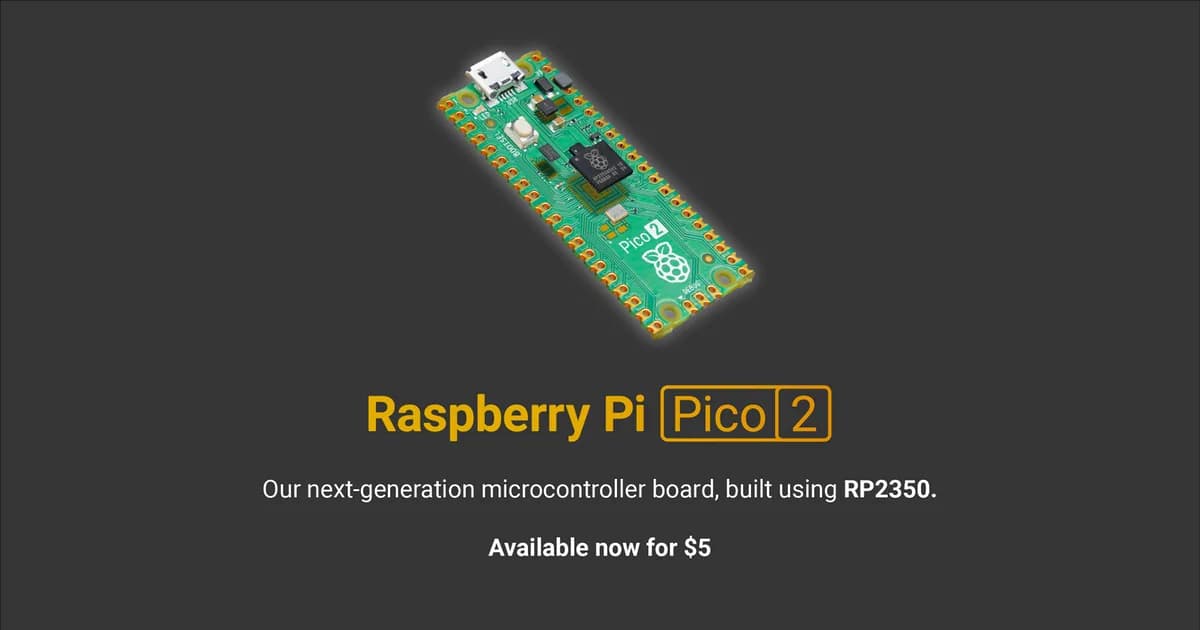
Raspberry Pi Pico 2 W
Wireless RP2350 microcontroller board with selectable Arm or RISC-V cores, 2.4 GHz Wi-Fi, Bluetooth and programmable I/O.
- Platform
- Raspberry Pi RP2350 dual-core Arm Cortex-M33/RISC-V plus wireless · PIO
- Builds
- 02