Matter device examples for Nano ESP32
Create Matter-compatible lights, switches, sensors or plugs using the ESP32 Arduino core's official examples.
View original project ↗What you’re building
The official Arduino-ESP32 Matter examples demonstrate how an ESP32 target can expose standards-based smart-home endpoints such as on/off and dimmable lights, plugs, buttons, blinds, fans, thermostats, contact, occupancy, leak, pressure, humidity, light, and temperature sensors. Arduino Nano ESP32 uses an ESP32-S3 module supported by the core, so a compatible example can be compiled for the board and commissioned into a Matter controller. The expected result is a discoverable accessory whose endpoint state maps to the example’s GPIO or simulated values. These examples are starting points, not universal drop-in products: Matter support, partition settings, GPIO assignments, and the controller’s commissioning path must match the chosen sketch and current Arduino-ESP32 core, and real mains-powered plug or appliance work requires properly isolated hardware.
Key steps
- Install a current Arduino-ESP32 core that includes the Matter library and select Arduino Nano ESP32 as the target.
- Choose one first-party Matter example whose endpoint type matches the intended low-voltage hardware, such as MatterOnOffLight or MatterTemperatureSensor.
- Review and adapt the example’s pin definitions and initial endpoint state without changing its commissioning flow.
- Compile and upload the sketch, then open serial output to obtain the example’s commissioning information and status.
- Commission the accessory with a compatible Matter controller and verify that controller state changes are reflected by the endpoint.
Original project and code
Original project pages, manufacturer documentation and repositories used while preparing this page. Last reviewed .
Hardware for this project
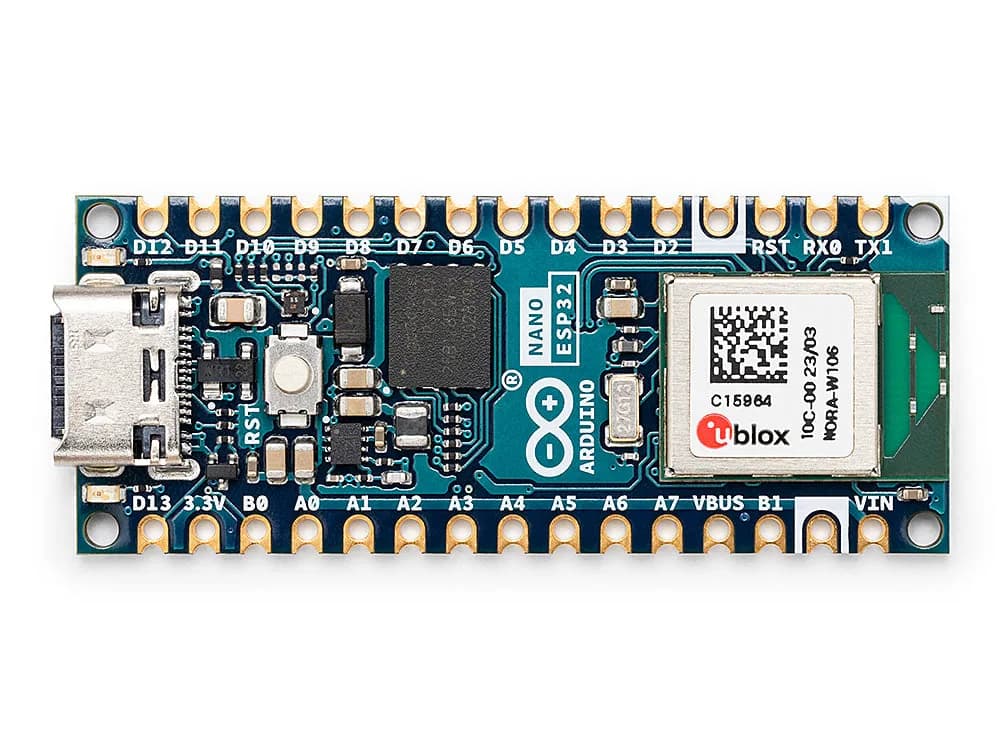
Nano ESP32
Nano-form-factor ESP32-S3 board supporting Arduino and MicroPython workflows with Wi-Fi and Bluetooth LE.
- Platform
- u-blox NORA-W106 module with Espressif ESP32-S3 · Arduino
- Builds
- 02